
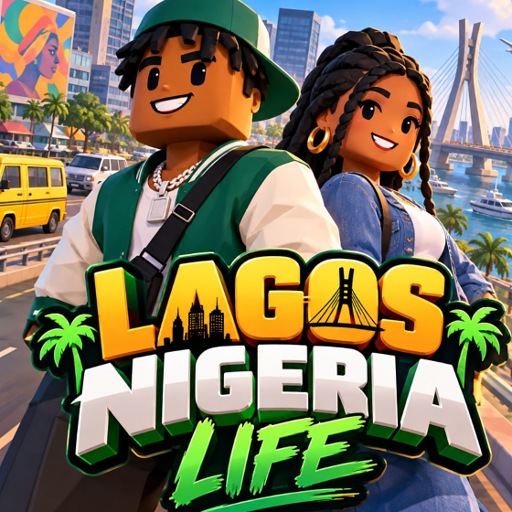

If you have been anywhere on Nigerian social media over the past few days, chances are you have heard someone say, “Have you played Lagos Life?”
What started as a browser game has quickly become one of the biggest talking points online, with Nigerians sharing screenshots of their virtual lives, discussing their jobs, houses, relationships and finances, and joking about everything from rent to “Lapo” and “Nepo” life.
Behind it all is Shalom Rayhamen, a Nigerian software developer who turned an idea inspired by one of her childhood favourite games into a virtual world that now has millions of people playing.
Lagos Life is a life-simulation game set in a virtual version of Lagos. Players create a character and essentially get to live another life. Think of The Sims but make it Nigerian. You get a job, earn virtual naira, buy food, manage your energy, pay rent, choose where you live, go out, meet other players and explore familiar places around Lagos.
The game currently features different careers, homes, social spots and activities. Players can visit places inspired by recognisable Lagos locations such as Amala Shitta and Quilox, while the game’s world incorporates familiar elements of Nigerian transport, entertainment, money, work and everyday survival.
The story behind Lagos Life is almost as interesting as the game itself. Shalom has said she grew up playing The Sims 3 and often wondered what the game would look like if its characters lived in a world inspired by her own. Instead of a fictional American suburb, what if they lived in Lagos? What if they had to worry about rent, transportation, work, food, money and the everyday experiences Nigerians understand?
Then came Lagos Run, another Nigerian browser game that lets players drive a yellow danfo through Lagos traffic.
According to Shalom, seeing that game helped push her idea from something she had imagined into something she could actually build. And on October 1, 2026, Nigeria’s Independence Day, Lagos Life went live.
Nobody could have predicted what happened next. From 1,500 players to millions. Within days, the numbers began climbing rapidly. The game crossed 100,000 players, then one million players within roughly four days of launch. By October 5, reports citing the game’s public dashboard showed more than 1.2 million players, millions of visits and tens of thousands of people online at the same time. Shalom has continued to expand the game based on player feedback. Lagos Life has since added Abuja and Port Harcourt alongside its original Lagos setting.
Lagos Life is not just attracting players. It is now attracting businesses. One of the smartest parts of the game’s model is its use of virtual advertising. Businesses can pay to place advertisements on billboards inside the game, effectively turning the virtual city into advertising space. Shalom also reported that Lagos Life generated $46,900 in revenue in its first four days, alongside 1.8 million players at the time of that report.
Shalom has created more than a game. She has taken an idea that could have remained a childhood “what if?” and turned it into a product that millions of people want to experience. She has also shown that Nigerian culture can be more than something we consume on social media. It can become the foundation for technology, entertainment and intellectual property.
For now, Lagos Life may be the internet’s latest obsession. But if Shalom can turn this explosive launch into a lasting gaming community, her biggest achievement may not be the number of players she has attracted in one week. It may be proving that a Nigerian story, built by a Nigerian creator, can become a massive digital experience in its own right.
So, what’s that idea you’ve been sitting on? Maybe it’s time to stop overthinking it and bring it to life. You never know, it could be the next big thing!
SOURCES


